

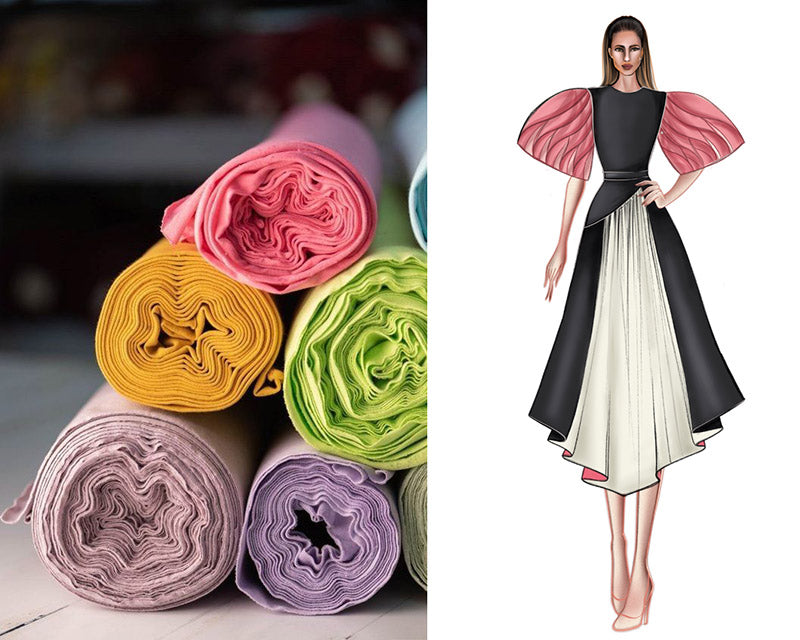
FROM SKETCH TO FINAL FORM
An idea can look convincing on paper and completely different once it becomes a garment.
That transformation from the first sketch to the final fitting is where much of the L’MANE design process happens.
A sketch gives us a direction. Fabric, construction and movement determine what the design eventually becomes.

THE FIRST LINE
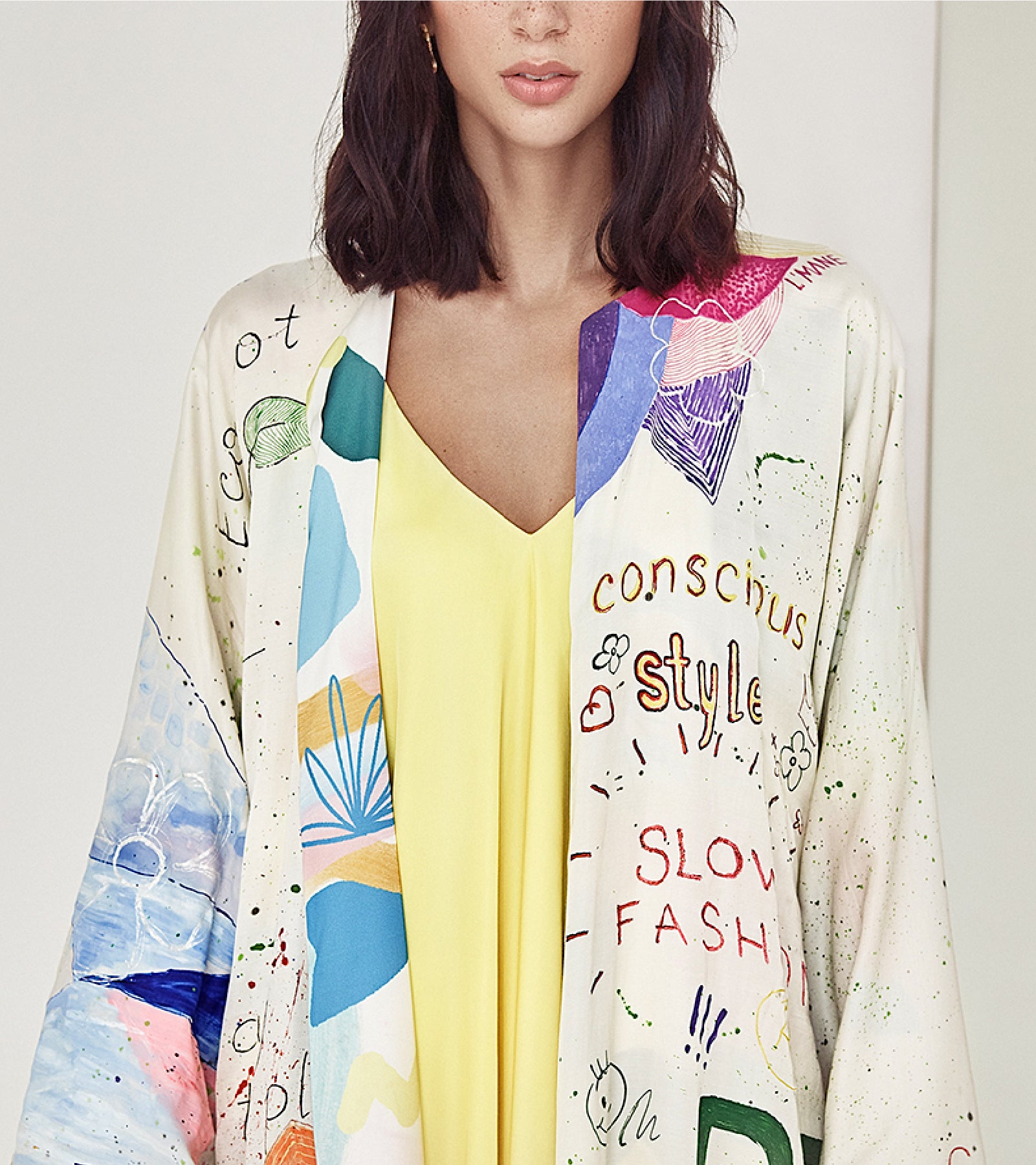
Some designs begin with a clear silhouette. Others develop from artwork, fabric, proportion or a particular construction detail.
Sketching allows these ideas to start taking shape.
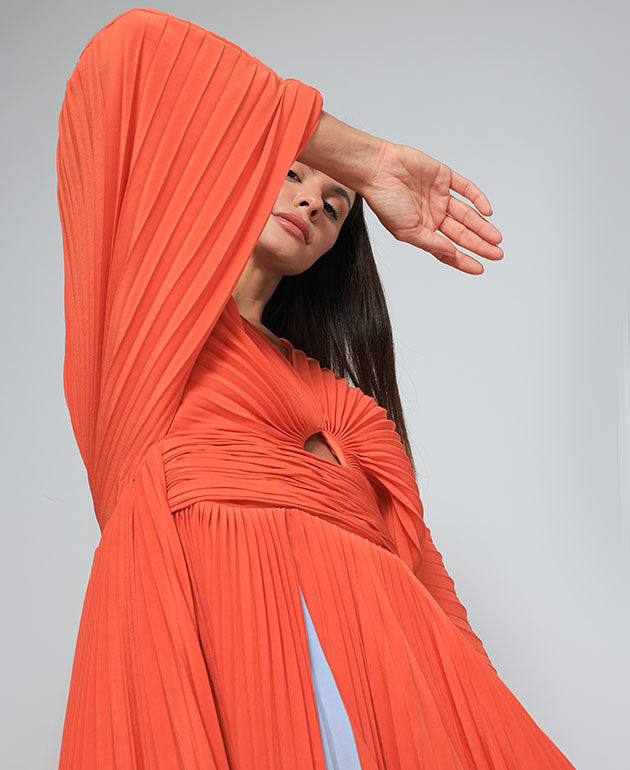
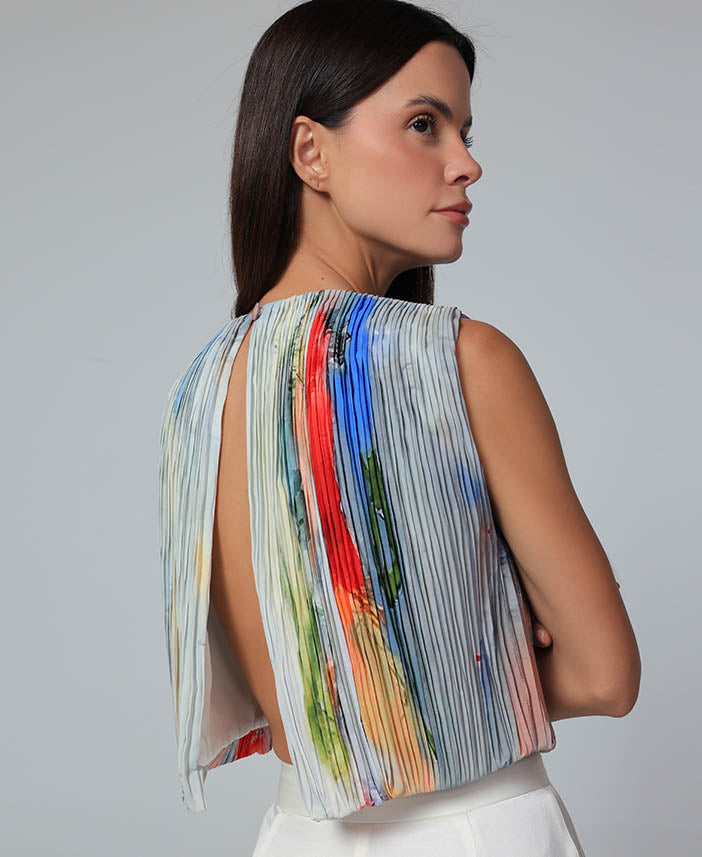
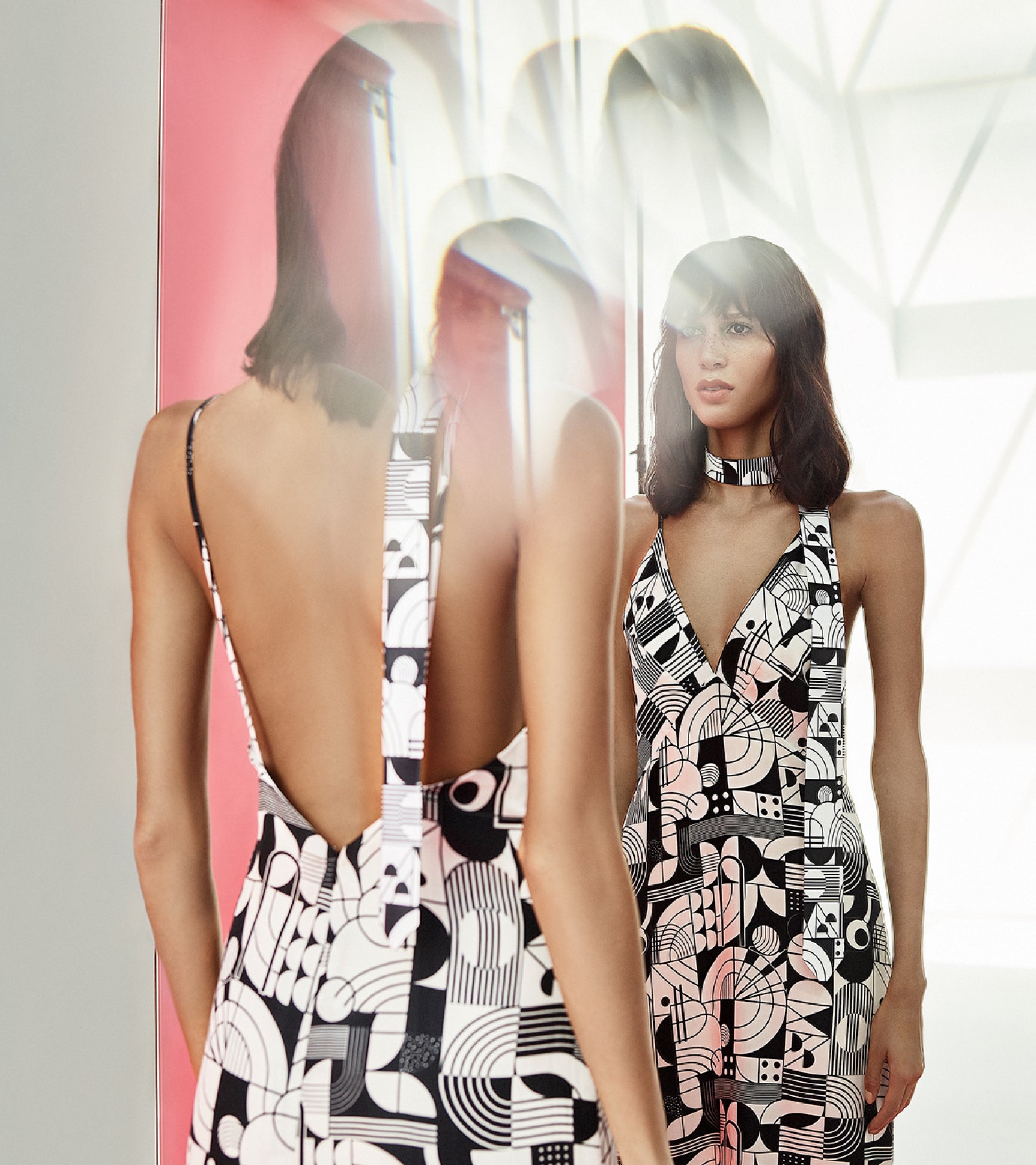
At this stage, we explore contrasts that frequently appear within L’MANE: architectural against fluid, asymmetric against balanced, expressive artwork against restrained form.
But the sketch is never treated as a fixed instruction.
It is the beginning of a conversation.
WHEN TWO DIMENSIONS BECOME THREE
The transition from sketch to sample changes everything.
A line drawn on paper needs to work around the body. Volume needs to sit in the right place. A drape needs enough fluidity to fall naturally, while a structured element needs the right fabric to hold its form.
This is often when a design begins to move away from the original drawing.
And that is part of the process.

REFINING THE DETAILS
Once the first sample is created, we begin looking more closely.
Does the proportion feel right? Does the sleeve need more or less volume? Is the asymmetric line creating the intended balance? Does a pleat open correctly? Is an additional detail contributing to the garment or distracting from it?
Sometimes refinement means adding something.
Often, it means removing it.
The aim is not to preserve every element of the original sketch. It is to understand which elements make the design stronger.
THE FITTING CHANGES THE DESIGN
A garment cannot be fully understood on a hanger or mannequin.
During fittings, we look at how it responds to the body how the fabric falls, where the volume moves and what happens to the silhouette when the wearer walks or turns.
Movement can reveal problems that are invisible when the garment is still.
It can also reveal the detail that makes the entire piece work.
KNOWING WHEN IT IS FINISHED
There is no dramatic final moment when every design suddenly becomes complete.
More often, it happens through a series of small decisions.
A proportion is corrected. A layer falls properly. An unnecessary detail disappears. The fabric begins to move the way we intended.
Eventually, the different elements start to feel resolved as one garment.
That is the point at which the sketch has become something else entirely.
The sketch begins the idea. The process shapes it. Movement tells us when the form is complete.