

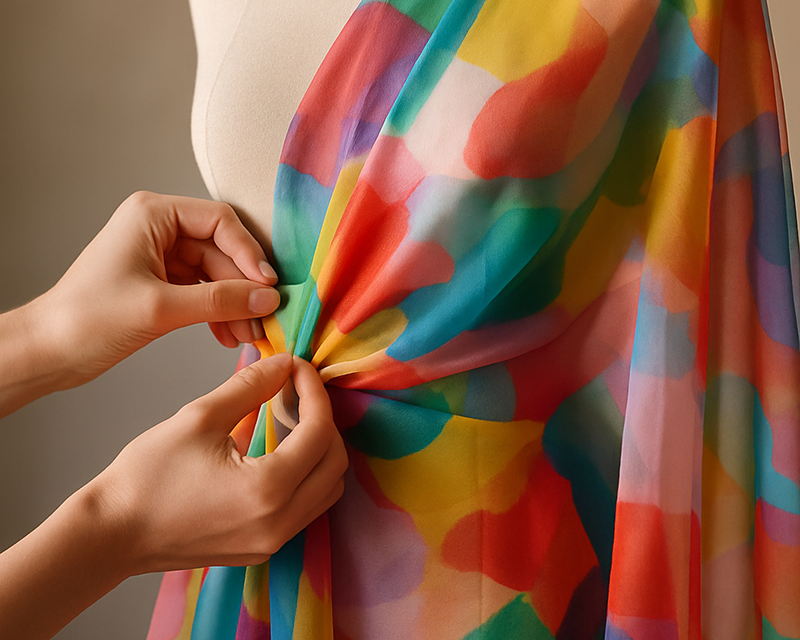
The Language of Fabric: How Texture Shapes Emotion
Before a garment is understood as a silhouette, fabric has already begun to shape how it will feel.
Its weight, transparency, texture and movement influence everything that follows. A structured fabric can hold an architectural line. Something fluid can soften a form. A sheer layer can reveal what sits beneath it.
At L’MANE, choosing fabric is as much about how it behaves as how it looks.

EVERY FABRIC HAS A CHARACTER
Different materials create completely different expressions.
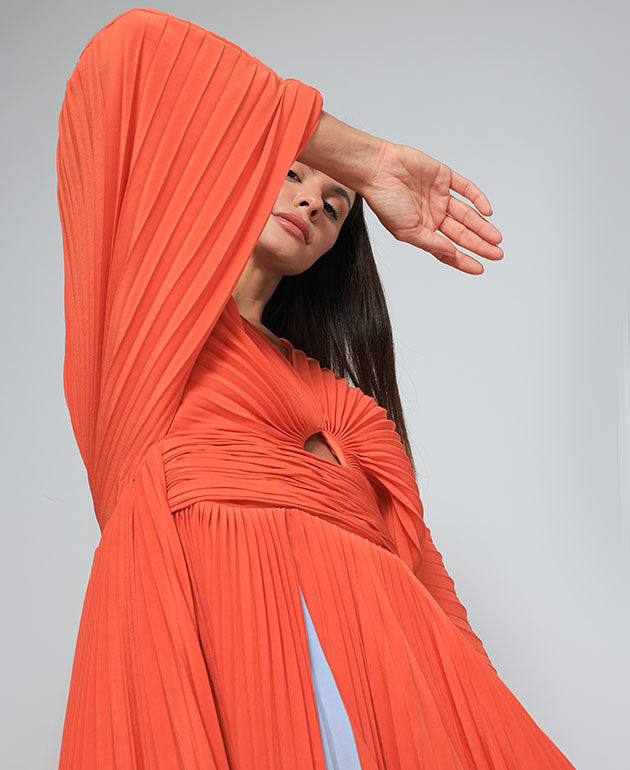
Organza can appear light and transparent while still holding structure. Chiffon introduces softness and movement. Satin reflects light across a fluid surface, while more structured fabrics allow sharper proportions and defined forms to emerge.
These qualities often influence the direction a design takes.
Sometimes the fabric supports the original sketch. At other times, seeing how it falls on the body changes the design entirely.
FABRIC AND FORM
We rarely think about fabric and silhouette separately.
A pleat behaves differently depending on the material used. Draping changes according to weight and fluidity. An asymmetric layer needs enough movement to reveal its construction without losing its shape.
This relationship between material and form is tested throughout the development process.
The question is not simply “Does this fabric look right?”
It is “Does it allow the garment to behave the way we imagined?”

WHEN ARTWORK MEETS TEXTURE
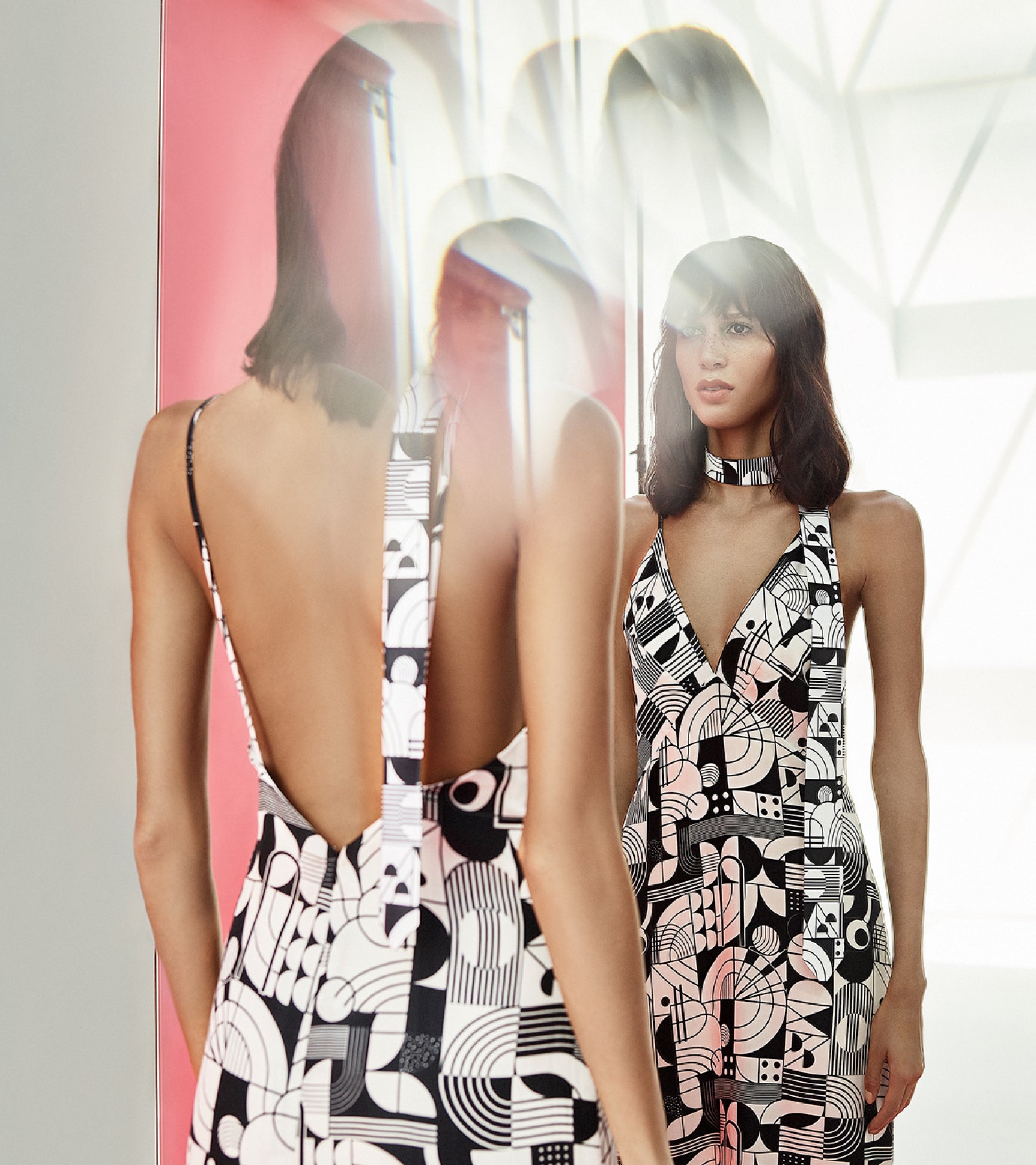
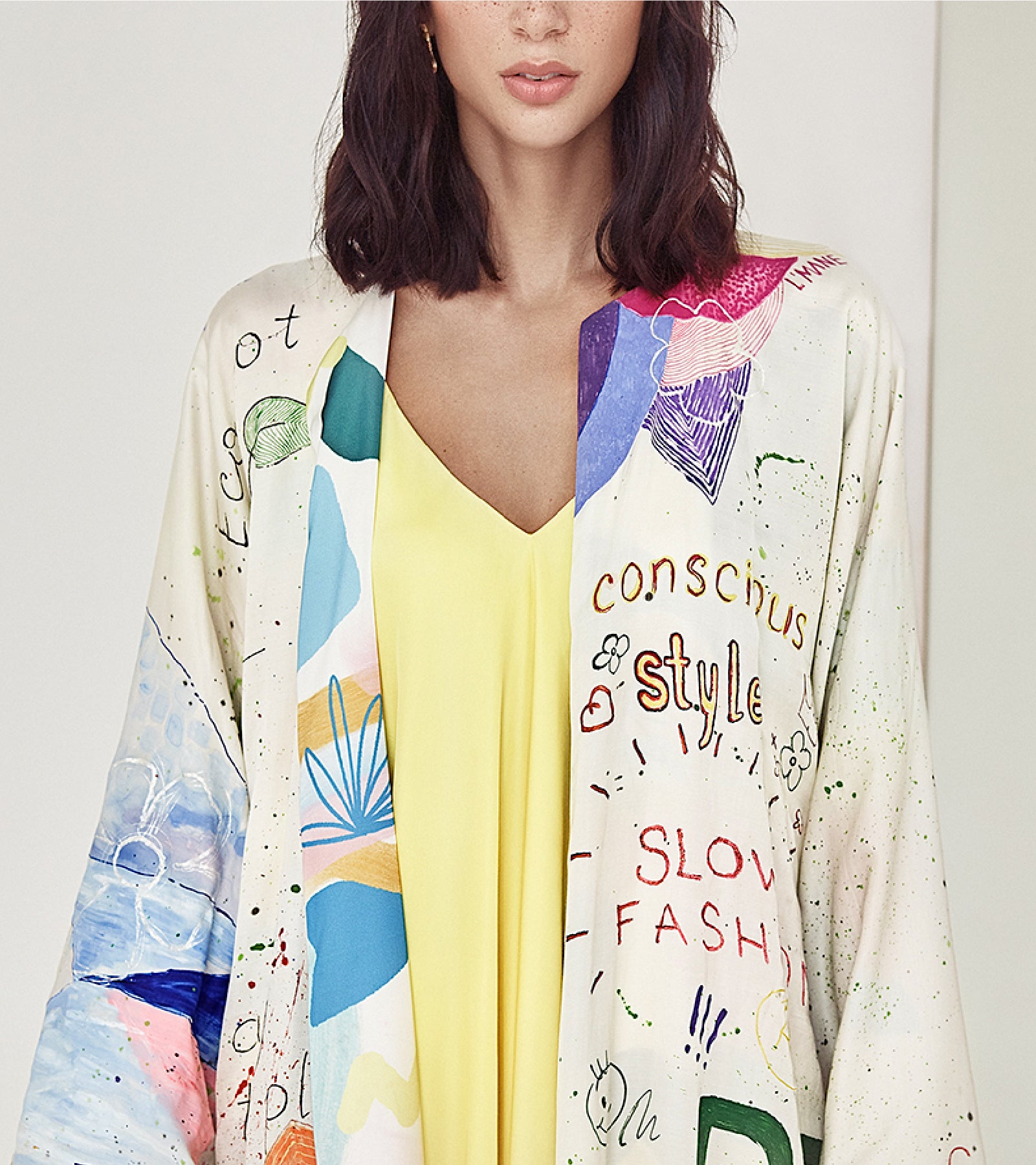
Fabric also changes the way L’MANE's original artwork is experienced.
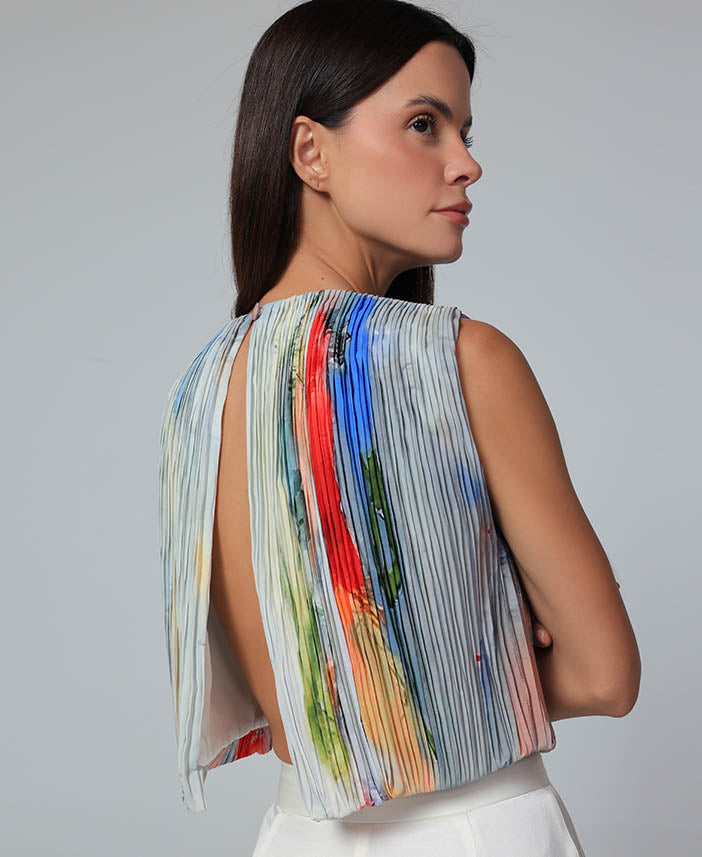
A print on a smooth surface can appear clear and uninterrupted. Place the same artwork across pleats, transparency or fluid layers and it begins to change.
Colours disappear into folds. Shapes overlap. Parts of the artwork become visible only as the garment moves.
The material becomes part of the artwork rather than simply its background.
TEXTURE YOU EXPERIENCE
Some elements of a garment are understood visually. Others are only discovered when it is worn.
The weight of the fabric, the way a layer moves against another, the opening of a pleat or the transparency of an overlay all contribute to that experience.
These details may be subtle, but they influence how a garment feels on the body and how it responds to movement.
MATERIAL AS PART OF THE DESIGN LANGUAGE
There is no single fabric that defines L’MANE.
The choice changes according to what each piece needs to express. What remains consistent is the way we approach it: material, artwork, construction and movement are considered together rather than in isolation.
Because fabric is not simply where a design is placed.
It is part of what gives the design its form, movement and character.